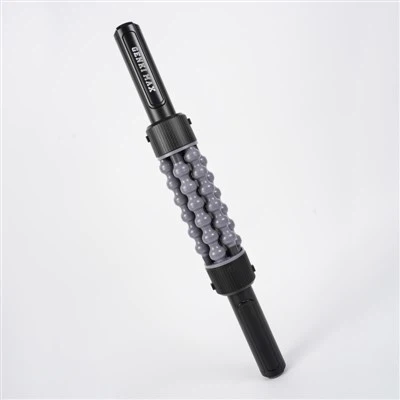
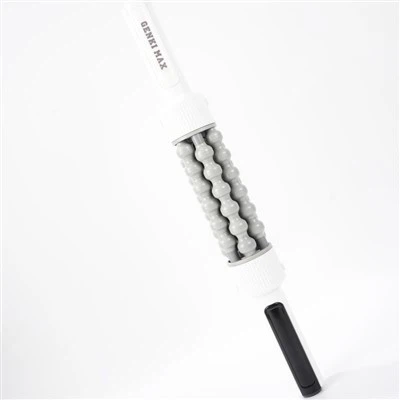
Foam rolling fascia has become a hot topic in the fitness and wellness community lately. As a supplier of foam roller fascia products, I've seen firsthand how these tools can make a real difference in people's lives. In this blog, I'm gonna dive into how foam rolling fascia impacts joint mobility and why it's something you should consider incorporating into your routine.
What is Fascia and Why Does It Matter?
Before we get into the nitty - gritty of how foam rolling affects joint mobility, let's talk about what fascia is. Fascia is a thin, connective tissue that wraps around your muscles, bones, nerves, and organs. It's like a big, stretchy net that holds everything in place.
Fascia plays a crucial role in our body's movement. It helps transmit force between muscles, allowing them to work together efficiently. When fascia gets tight or restricted, it can limit our range of motion and even lead to pain. For example, if the fascia around your shoulder joint is tight, you might find it hard to lift your arm overhead.
How Foam Rolling Works on Fascia
Foam rolling is a form of self - myofascial release. When you roll a foam roller over your body, you're applying pressure to the fascia. This pressure helps to break up adhesions (knots) in the fascia and increase blood flow to the area.
Think of it like unknotting a rope. When the rope is all tangled up, it doesn't move smoothly. But once you untangle it, it can move freely. Similarly, when you break up the adhesions in your fascia through foam rolling, your muscles and joints can move more easily.
Let's say you've been sitting at a desk all day, and your hip flexors are tight. By using a foam roller on your hip flexors, you can release the tension in the fascia around those muscles. This can help improve your hip mobility, making it easier to walk, run, or even just sit up straight.
Impact on Joint Mobility
Now, let's get to the main question: how does foam rolling fascia impact joint mobility?
Increased Range of Motion
One of the most obvious effects of foam rolling is an increase in range of motion. When the fascia around a joint is tight, it restricts the movement of the joint. By releasing the tension in the fascia, foam rolling allows the joint to move through its full range of motion.


For instance, if you have tight fascia in your calves, it can limit your ankle mobility. You might find it hard to flex your foot upwards. But after a few minutes of foam rolling your calves, you'll likely notice that you can flex your foot more easily. This is because the foam rolling has loosened up the fascia, allowing the ankle joint to move more freely.
Reduced Joint Stiffness
Joint stiffness is a common problem, especially as we get older or after a long period of inactivity. Foam rolling can help reduce joint stiffness by improving blood circulation to the area. When blood flow increases, it brings oxygen and nutrients to the joint, which helps to lubricate it and reduce stiffness.
Let's take the knee joint as an example. If you have stiff knees, foam rolling the muscles around the knee, such as the quadriceps and hamstrings, can help. The increased blood flow to these muscles and the surrounding fascia can make the knee joint feel more flexible and less stiff.
Improved Muscle Balance
Foam rolling also helps to improve muscle balance around a joint. When one muscle is tight and another is weak, it can put extra stress on the joint. This can lead to pain and reduced joint mobility.
For example, if your chest muscles are tight and your back muscles are weak, it can cause your shoulders to hunch forward. This puts extra stress on the shoulder joints. By foam rolling your chest muscles to release the tension and doing exercises to strengthen your back muscles, you can restore muscle balance around the shoulder joint. This, in turn, improves shoulder joint mobility and reduces the risk of injury.
Our Foam Roller Fascia Products
As a supplier of foam roller fascia products, we offer a variety of options to suit different needs.
If you're looking for a convenient option, check out our Portable Electric Muscle Roller. It's lightweight and easy to carry around, so you can use it anywhere, whether you're at the gym, at home, or on the go.
For those who are dealing with cellulite, our Cellulite Blaster Roller is a great choice. It not only helps with cellulite reduction but also improves fascia health and joint mobility.
And if you're a fitness enthusiast, our Fitness Electric Muscle Roller is designed to meet your high - intensity training needs. It provides a deeper massage and more effective fascia release.
Incorporating Foam Rolling into Your Routine
So, how can you start using foam rolling to improve your joint mobility? Here are some tips:
- Start Slowly: If you're new to foam rolling, start with a few minutes each day and gradually increase the time as your body gets used to it.
- Target Specific Areas: Identify the areas where you have tight fascia or limited joint mobility. Focus on these areas during your foam rolling sessions.
- Combine with Stretching: Foam rolling and stretching work well together. After foam rolling, do some gentle stretches to further improve your range of motion.
Contact Us for Procurement
If you're interested in our foam roller fascia products, whether you're a fitness studio owner looking to stock up, a distributor wanting to add our products to your inventory, or an individual looking for a high - quality foam roller, we'd love to hear from you. Reach out to us to start a procurement discussion and see how our products can meet your needs.
References
- Knothe Tate, M. L. (2009). "Fascia is able to transmit mechanical tension: a review of the evidence." Journal of Bodywork and Movement Therapies.
- Myer, G. D., et al. (2011). "Influence of a dynamic warm - up on lower extremity flexibility, strength, power, and selected kinematic variables." Journal of Strength and Conditioning Research.